Crafting Atmosphere: A Practical Guide to the Tea Light Haunted House SVG Luminary
Halloween décor often falls into two distinct categories: mass-produced plastic decorations that lack character, or high-end artisan pieces that come with a prohibitive price tag. For crafters and home decorators seeking a middle ground, digital cut files offer a compelling solution. Among these, the Tea Light Haunted House SVG has emerged as a popular choice for creating atmospheric, three-dimensional paper luminaries. This design transforms flat sheets of cardstock into an intricate, glowing structure that casts spooky shadows, serving as an effective centerpiece or mantel accent.
Understanding whether this specific digital asset fits your project requires looking beyond the marketing images. It involves evaluating the complexity of assembly, the compatibility with your cutting equipment, and the aesthetic impact compared to other Halloween crafting trends. This guide explores the practical realities of using the Tea Light Haunted House SVG, helping you decide if it is the right resource for your fall festivities.
Design Mechanics and Visual Impact
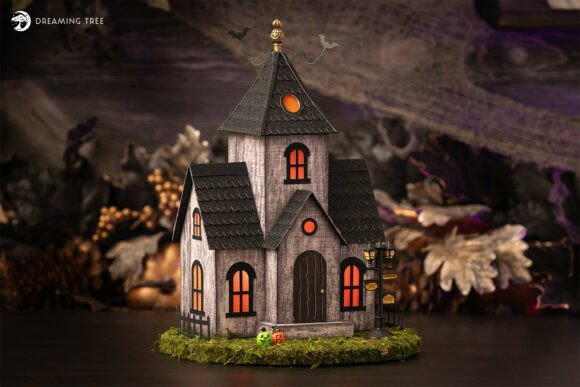
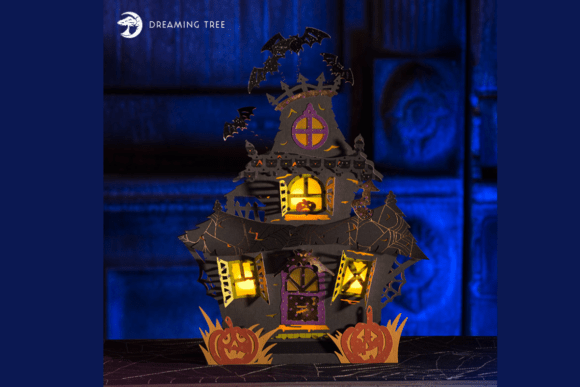
The core appeal of the Tea Light Haunted House SVG lies in its layering technique. Unlike simple silhouette cutouts, this design utilizes multiple layers of paper to create depth. When assembled, the structure stands approximately 8 inches high and 8 inches wide, with a depth of roughly 2.75 inches. This three-dimensional aspect is crucial for its function as a luminary. The interplay between the solid cardstock walls and the translucent vellum windows allows light from internal tealights to diffuse softly, while the intricate cutouts cast sharp, detailed shadows against surrounding walls.
The design typically incorporates various architectural elements such as turrets, arched windows, and textured roofing. These details are not merely decorative; they serve structural purposes by locking layers together or providing tabs for adhesion. The inclusion of specific pattern papers—such as granite, copper, purple, and cat-themed prints—adds visual interest that solid colors alone cannot achieve. This mix of textures and patterns mimics the aged, eclectic look of a classic haunted mansion, enhancing the realism of the piece.
For those unfamiliar with paper engineering, it is important to note that the "haunted" effect is heavily dependent on lighting. The design is optimized for use with flameless tealights. The flickering LED effect simulates candlelight without the fire hazard, making it safe for indoor use around children and pets. The warm glow contrasts effectively with the darker exterior cardstock, creating the intended eerie ambiance.
Machine Compatibility and Technical Requirements
One of the primary considerations when selecting a digital cut file is hardware compatibility. The Tea Light Haunted House SVG is designed primarily for machines that utilize 12″×12″ cutting mats, such as the Cricut Explore Air, Cricut Maker, Silhouette CAMEO, and Brother ScanNCut. These machines provide the necessary surface area to cut the larger structural components efficiently.
Users with smaller machines, such as those limited to 6″×12″ or 8.5″×11″ mats, face a tradeoff. While the design can technically be scaled down to fit smaller cutting areas, this reduction impacts the final dimensions and potentially the ease of assembly. Smaller components require finer motor skills and more precise glue application. Therefore, if you possess a smaller format cutter, you must be prepared to resize the project significantly, which may alter the proportional aesthetics of the haunted house.
The file format provided is SVG (Scalable Vector Graphics), which is the industry standard for cutting machines. This ensures that the lines remain crisp regardless of scaling. Additionally, the inclusion of a PDF legend is a critical support tool. This document helps users identify individual pieces and suggests complementary paper colors, reducing the cognitive load during the sorting and assembly phases. Without such a guide, managing the numerous small parts typical of 3D paper crafts can become overwhelming.
Material Selection and Supply Considerations
The quality of the final product is directly tied to the materials used. The recommended supply list for this project is specific, calling for 80 lb cover (216 gsm) cardstock. This weight is substantial enough to hold the structure’s shape without sagging, yet flexible enough to fold cleanly along score lines. Using lighter paper may result in a flimsy luminary that collapses under its own weight, while heavier board may be difficult for some cutting machines to process without multiple passes.
The color palette plays a significant role in the visual success of the project. The design calls for five sheets of 12×12 Granite Cardstock for the main structure, providing a neutral, stone-like base. Accent colors include Dandelion, Black, and various patterned papers in yellow, purple, copper, orange, and green. The use of Yellow Vellum for the windows is non-negotiable for achieving the desired glow; standard white paper will block too much light, while clear acetate may look too modern and sterile.
Additionally, the project requires adhesive supplies such as hot glue or strong craft tape, floral wire for structural reinforcement, and four flameless tealights. The reliance on specific patterned papers means that crafters must either purchase these individually or ensure their existing stash matches the required hues. This can add to the overall cost and time investment, particularly if sourcing specific themes like "cat pattern" or "copper pattern" proves difficult.
Assembly Complexity and Time Investment
While the digital file simplifies the cutting process, the assembly remains a manual, labor-intensive task. The presence of a step-by-step YouTube tutorial is a significant advantage, offering visual guidance that written instructions often lack. However, even with video support, builders should anticipate a moderate to high level of difficulty. The project involves numerous small pieces, precise folding, and careful alignment.
Realistic time estimates for completion range from two to four hours, depending on the crafter’s experience with 3D paper projects. Beginners may find the process frustrating, particularly when attaching small tabs or aligning the roof sections. Experienced crafters, however, will appreciate the logical progression of the build and the satisfaction of seeing the flat pieces transform into a cohesive structure.
It is advisable to set up a dedicated workspace with good lighting and organized trays for sorting pieces. Rushing the assembly often leads to misaligned layers, which can compromise the structural integrity and visual symmetry of the haunted house. Patience is as much a required tool as the cutting machine itself.
Comparative Analysis: SVGs vs. Pre-Made Decor
When deciding between creating a Tea Light Haunted House SVG luminary and purchasing a pre-made decoration, several factors come into play. Pre-made items offer convenience and immediate availability but often lack uniqueness and may use lower-quality materials. In contrast, the DIY approach allows for complete customization. Crafters can swap out paper colors to match their specific home décor, adjust the size to fit available space, and take pride in the handmade nature of the piece.
Compared to other digital cut files, this design stands out due to its integrated lighting feature. Many Halloween SVGs are purely decorative wall hangings or flat signs. The 3D luminary aspect adds functional value, serving as both décor and ambient lighting. However, this added functionality comes with increased complexity. Simpler 2D projects may be more suitable for those with limited time or beginner-level crafting skills.
Furthermore, the reusability of the digital file is a key economic benefit. Once purchased, the SVG can be used repeatedly, allowing crafters to produce multiple units for gifts or large-scale displays. This contrasts with single-use pre-made items that may degrade after one season. For those who enjoy seasonal crafting, the initial investment in time and materials yields long-term value.
Final Verdict: Is This Project Right for You?
The Tea Light Haunted House SVG is an excellent choice for intermediate to advanced crafters who value detail and atmosphere. It is best suited for individuals who have access to a 12″×12″ cutting machine and are comfortable working with small, intricate parts. The resulting luminary offers a sophisticated, custom look that elevates Halloween décor beyond typical store-bought options.
However, it may not be the ideal project for beginners or those seeking a quick weekend activity. The requirement for specific paper weights and patterns, combined with the time-intensive assembly, demands a significant commitment. If you prefer simplicity, consider starting with 2D Halloween SVGs before attempting this 3D structure. Conversely, if you enjoy the process of building and have the necessary tools, this design provides a rewarding challenge that results in a striking, professional-quality decoration.
Ultimately, the decision hinges on your willingness to invest time in exchange for a unique, personalized result. For those ready to embrace the complexity, the Tea Light Haunted House SVG offers a delightful blend of technical crafting and creative expression, perfect for enchanting your home during the fall season.