Integrating the Bowling Pop Up Card SVG into Your Creative Workflow
For crafters, small business owners, and hobbyists who rely on digital cutting machines, the difference between a generic project and a professional-grade product often lies in the quality of the source file. The Bowling Pop Up Card SVG represents more than just a festive design; it is a structured asset designed to streamline the production of dimensional paper crafts. Whether you are creating invitations for a themed party or producing handmade greeting cards for retail, understanding how to integrate this specific file type into your existing workflow can significantly enhance efficiency and consistency.
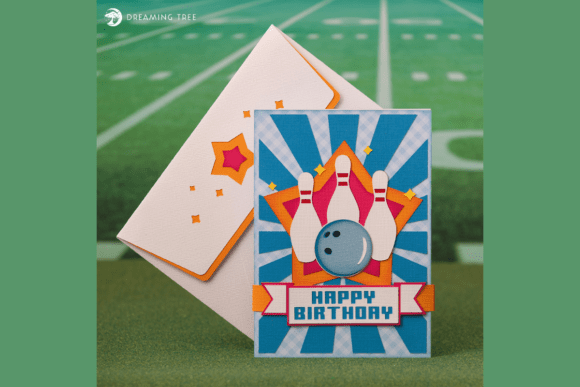
This design features a dynamic composition including a trio of pins, a bowling ball, and a bold starburst background. When assembled, the card pops with color and dimension, offering a tactile experience that flat prints cannot match. However, the true value of this asset is not just in its visual appeal, but in its technical preparation. Designed specifically for 12x12 cutting machines, the file comes with a PDF legend and a step-by-step video tutorial, ensuring that the transition from digital file to physical object is smooth and predictable.
Pre-Production Planning and Material Preparation
Successful implementation of any complex papercraft begins long before the blade touches the paper. The Bowling Pop Up Card SVG requires precise material selection to achieve the intended structural integrity and visual contrast. Because the design relies on layering and pop-up mechanisms, the weight and texture of the cardstock are critical variables in your planning phase.
The supply list provided with the design serves as a foundational checklist for procurement. To replicate the intended aesthetic, you will need three sheets of 12x12 snowy white cardstock for the base structure, along with specific accent colors: mandarin orange, jet black, all-American red, blue sky, brownie, and Honolulu blue. By organizing these materials before opening your design software, you minimize interruptions during the cutting process. This approach aligns with lean manufacturing principles, where reducing movement and search time leads to higher throughput.
It is also essential to verify the compatibility of your materials with your machine. While the design is optimized for standard 12x12 cutters, users with different machine sizes should note that resizing is possible. However, altering dimensions may affect the mechanical function of the pop-up elements. Therefore, maintaining the original aspect ratio and testing with scrap paper before committing to final stock is a prudent quality control step.
Digital File Management and Software Compatibility
One of the primary advantages of using an SVG format is its scalability and compatibility across various design platforms. Unlike raster images, which lose quality when resized, the Bowling Pop Up Card SVG retains crisp edges regardless of scale. This makes it a versatile asset for creators who use different software ecosystems, such as Cricut Design Space, Silhouette Studio, or Adobe Illustrator.
Upon downloading the package, you will receive the SVG file and a PDF legend. The legend is a crucial tool for organization. It helps you identify individual pieces within the complex vector file, allowing you to assign specific colors to layers efficiently. In a professional workflow, this step prevents errors during the cutting phase, such as cutting a black pin piece from white paper due to misidentified layers.
For educators or workshop leaders, this file structure offers an excellent teaching opportunity. You can demonstrate how vector paths work, how to group elements for easier handling, and how to use the "attach" or "weld" functions if necessary. The inclusion of a step-by-step video tutorial further supports this learning curve, providing a visual reference that complements the static PDF instructions. This multi-format support ensures that users with different learning styles can successfully navigate the assembly process.
Execution: Cutting and Assembly Efficiency
The cutting phase is where preparation meets execution. With the Bowling Birthday Pop-Up Card SVG, the goal is to minimize waste and maximize precision. Since the design includes intricate details like the starburst background and small pin components, using a fine-point blade and appropriate mat grip settings is essential. For the heavier 12x12 cardstock, a strong grip mat is recommended to prevent shifting during the cut.
Organization during assembly is equally important. The pop-up mechanism relies on the correct folding and gluing of tabs and slots. Laying out all cut pieces according to the PDF legend before applying adhesive creates a clear visual map of the project. This method reduces the cognitive load during assembly, allowing you to focus on precision rather than searching for the next piece.
The design’s dimensions—7 inches high by 5 inches wide with a depth of 0.125 inches—are optimized for standard envelopes. The included matching envelope design with star accents provides a cohesive finishing touch. For those selling these cards, this completeness adds perceived value. Customers receive not just a card, but a fully packaged gift-ready item. This attention to detail can differentiate your products in a crowded marketplace.
Strategic Use Cases and Business Integration
Beyond personal use, the Bowling Pop Up Card SVG has significant potential for commercial application. Small business owners specializing in handmade goods can incorporate this design into their seasonal offerings. Bowling-themed parties are popular for birthdays across various age groups, creating a consistent demand for themed stationery. By mastering this single design, you can create variations by changing color palettes to match specific team colors or party themes, thereby expanding your product line without designing new files from scratch.
Marketers and event planners can also leverage this asset for promotional purposes. A handmade invitation stands out in a digital-heavy world. Sending a physical, dimensional invite for a corporate bowling event or a community fundraiser can increase engagement and attendance rates. The effort implied by a handmade card signals importance and care, reinforcing brand values of quality and attention to detail.
For educators, this project can be adapted for classroom activities involving geometry and spatial reasoning. Students can learn about 3D structures, symmetry, and measurement while assembling the card. The clear instructions and visual aids make it accessible for various skill levels, fostering confidence in young creators.
Quality Control and Long-Term Value
Maintaining consistency is key when producing multiple units. Establish a standard operating procedure for each stage: material inspection, cutting settings, assembly order, and final inspection. Documenting these steps ensures that every card meets your quality standards, whether you are making one or one hundred. The Bowling Pop Up Card SVG is designed with repeatability in mind, making it an ideal candidate for batch production.
Furthermore, investing in high-quality digital assets like this SVG saves time in the long run. Instead of spending hours designing complex pop-up mechanisms from scratch, you utilize a tested and proven template. This allows you to allocate more resources to marketing, customer service, or other creative endeavors. The initial cost of the file is offset by the hours saved in design and troubleshooting.
In conclusion, the Bowling Pop Up Card SVG is a robust tool for anyone looking to enhance their papercraft projects. Its thoughtful design, comprehensive support materials, and compatibility with standard tools make it a practical addition to any creator’s library. By integrating this asset into a structured workflow—from material preparation to final assembly—you can produce high-quality, professional results efficiently. Whether for personal enjoyment or commercial gain, this design offers a reliable pathway to creative success.